

Most educational investments are evaluated on a simple question: does this program work? That is the wrong question.
Where in the system does this intervention operate?
A program can work — produce measurable outcomes — while operating at low leverage. Another intervention might be harder to measure but operate at the level that changes everything downstream.

The question funders should ask
steamHouse makes a specific claim: we operate at the highest-leverage point in human development — the capacities that make all other capacities possible.
Invest in a specific skill — coding, public speaking, financial analysis — and someone develops that skill. The return is bounded by the domain. Now consider what happens when you invest in how someone thinks. They don't just think better about one domain. They think better about everything, including how to learn other skills faster.
Improve how someone cares, and you improve their direction in everything. Improve how someone thinks, and you improve their navigation in everything. Improve how someone acts, and you improve their effectiveness in everything.
Content knowledge becomes obsolete. Specific skills get automated. Meta-cognitive capacity compounds across a lifetime, transfers to every domain, and never becomes obsolete — and it is what a person is actually running on in the moments that decide the most: the consequential choice, the hard conversation, the decision made under pressure with no rubric to follow.
Every dollar spent developing these capacities multiplies the return on every other educational investment.
This is not a modest claim. It is the central argument for why steamHouse deserves serious attention.
Seven mechanisms of compound return
steamHouse doesn't operate at high leverage only in theory. The design carries specific mechanisms that compound.
Meta-intervention
Develops capacities that improve all other capacities. Reflective thinking improves every domain of thinking; emotional regulation improves every domain of action. Not one program among many — the program that makes other programs work better.
Universality
The framework applies across cultures, contexts, and developmental stages. Heart-Head-Body is human, not cultural. The four principles transcend partisan and religious divisions. One investment creates infrastructure usable everywhere.
Timing
Adolescence is the window when intervention has maximum effect. The brain is rewiring for adult cognition, identity is forming, habits are consolidating. The window closes. Investment here shapes the trajectory of an entire life.
Cascade
Individual development improves teams. Teams improve communities. Communities improve culture. The return isn't only individual — it ripples outward through every system the person touches.
Transmissibility
Open-source, adaptable, replicable. Bootstrap Guides let any existing team activity overlay the curriculum. Any caring adult can facilitate. No institutional adoption required. Investment creates capacity that spreads on its own.
Epistemic defense
Creates people who resist manipulation rather than needing ongoing protection. Once someone understands how their mind can be exploited, they are harder to exploit forever. In an era of information warfare, that is strategic infrastructure for a democratic society.
Infrastructure
Makes other programs more effective rather than competing with them. Robotics teams develop better collaboration. Theater groups develop deeper self-awareness. Sports teams build stronger culture. The investment amplifies every other investment in the ecosystem.

Independent convergence
The argument above would be strong even as theory alone. But six serious frameworks — developed independently, in different countries, over six decades, through six genuinely different epistemological methods — arrived at the same architectural conclusions without knowing steamHouse existed.
Center for Curriculum Redesign Charles Fadel · independent global nonprofit, Boston · 2010–present
Worked from curriculum theory and workforce demands, downward toward what 21st-century education must produce.
Jubilee Centre for Character and Virtues University of Birmingham · 2012–present
Worked from neo-Aristotelian moral philosophy, upward toward contemporary educational application.
Philosophy for Children Matthew Lipman · Columbia · 1969–present
Worked from philosophy of education and direct observation of children, into structured philosophical inquiry.
Project Zero Harvard Graduate School of Education · 1967–present
Worked from longitudinal research on what actually helps learners develop, into the Thinking Routines framework.
Harlem Village Academies Deborah Kenny · 2003–present
Worked from a quarter-century of urban-charter practitioner-scholarship, into an integrated character, cognition, and ethical-purpose architecture.
steamHouse Brenton Burnett · Golden, Colorado · 2018–present
Worked from 22 years of teaching and sustained work in a real community, inward toward the principles that explained the observations.


We're educators, parents, and community-builders who believe conscious and creative thinking is needed more than ever
The question isn't whether you'll have automatic patterns. You will. The question is — who wrote them?
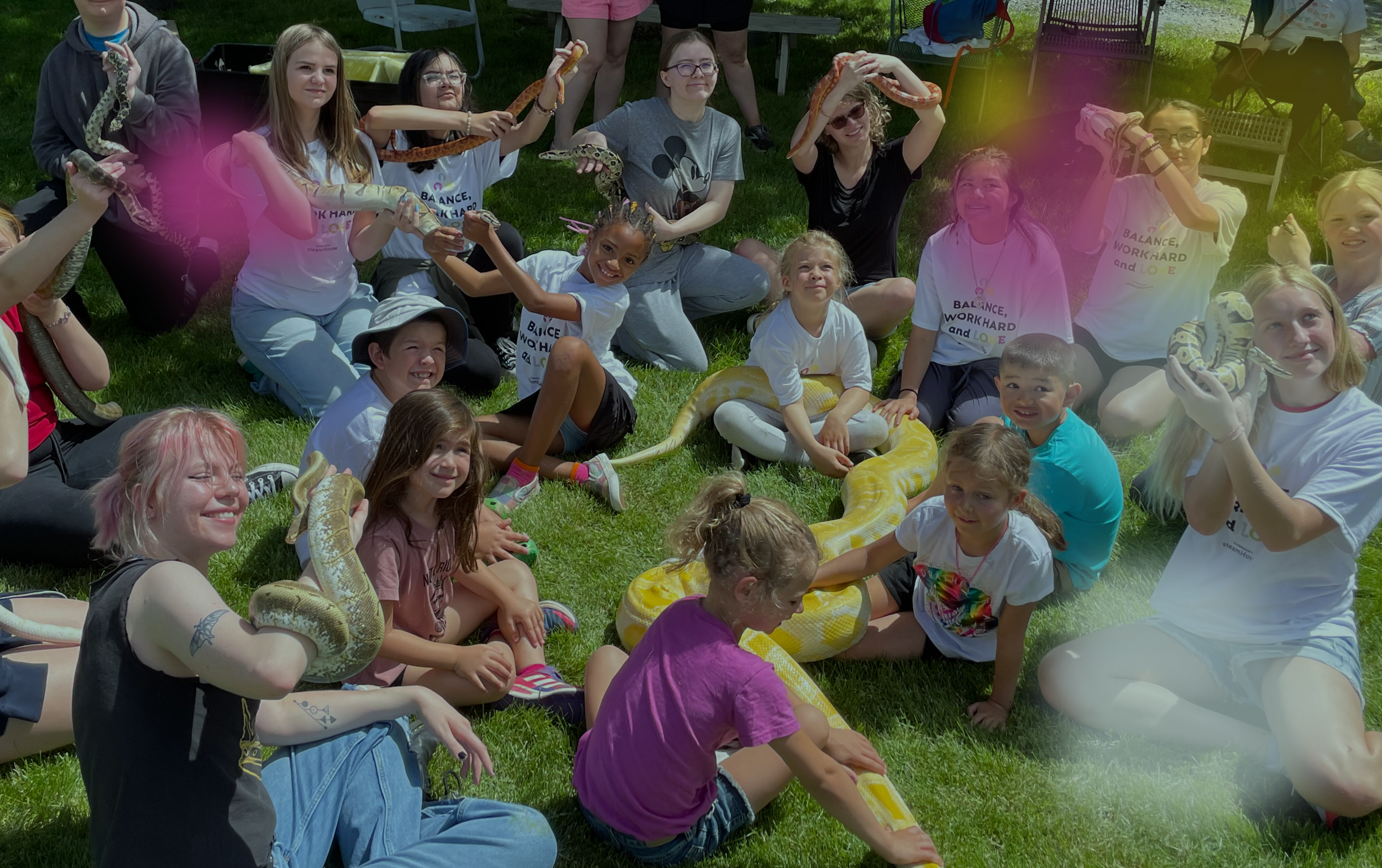

Whether you want to implement our curriculum, participate in Club activities, or support our mission, there's a place for you in the steamHouse community.
steamHouse is: Club, Commons, Chronicles
The Fairmount steamHouse is a community-based project developing mentoring models for team and project-based activities.
The steamHouse curriculum is crafted through three interconnected channels that allow us to design curriculum (Commons) and cultivate practice (Club) and deliberate meaning (Chronicles).
Commons
Frameworks, tools, curriculum
Universal frameworks any mentor, teacher, or parent can use with any team or project-based activity. These thinking tools wrap around what you're already doing, enabling conscious development alongside topical learning.
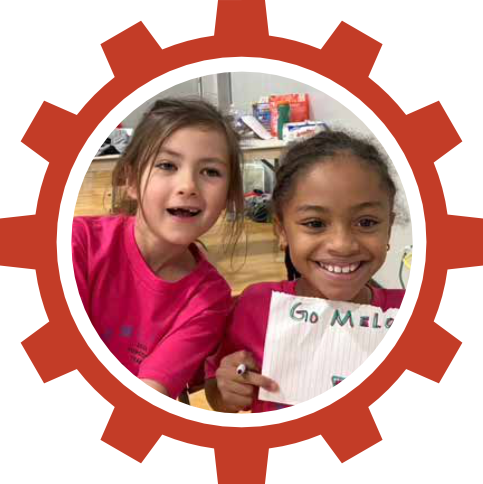
Club
Practice Playground
Real kids. Real activities. Real development, happening in real time. Local cooperative programming where the frameworks get lived — young people and mentors building, making, and figuring things out together.
Chronicles
Meaning-making
through story
Story is how we make meaning, construct identity, and transmit wisdom across generations. It's how we engage, connect, and care — the shared narrative that turns chosen principles into a way of life.